Showing posts with label business dress. Show all posts

Thursday, March 6, 2014

Parts of Fashion: Expression

The second biggest part of fashion is expression. This is really a subset of comfort, but that's why comfort is the biggest aspect of fashion. In order for clothes to sell, they have to make a person feel like they are expressing themselves. There are several different ways people express themselves with clothes.

Casual Expression

Just because you look fine doesn't mean you feel fine.
For a lot of people, especially those who are still in school or only work part time, casual expression is the most common type when it comes to clothes. This is what you wear when you aren't working. This type of expression is different for everyone, though it is rather similar in concept. I have three examples of different types of casual expression.
  1. When I was a senior in high school, one of my close friends stopped wearing graphic tees. She would still wear jeans, but she always had her hair and make up done and wore blouses. She said she decided to treat everyone like a future employer, so she didn't want them to see her wearing anything that could compromise that relationship. While she dressed nicer than most other high school seniors, she still had a level up for business wear.
  2. A long-time friend and former roommate of mine is most commonly seen in jeans, a graphic tee and Converse that almost don't count as shoes anymore. She always looks comfortable. A lot of people think she's a tom boy, and she can act that way sometimes, but she also likes make up (though she doesn't have time to put it on most days) and other girly things. The point is that she doesn't dress to impress other people on a day-to-day basis because she doesn't feel the need to. She has a comfortable, laid-back personality and that's the way she looks.
  3. I have several friends who will change level of formality for no apparent reason (and I'm included in this group). These friends will wear a funny t-shirt one day and a collared shirt the next. They may even switch between jeans, shorts, khakis and slacks. I have found that this group is the most common group. Everyone has their own reasons for doing this, but I think it's generally pretty similar to why I do it. I dress in accordance to my mood. While I try to always look nice, some days are graphic tee days and others a blouse days. Who I am seeing that day usually doesn't effect what I choose to wear (if it's a true casual day). I always try to look like I took at least a little time with my appearance. However, if I'm having an "I don't care, I just want to wear something" day, I'll grab a graphic tee. If I'm having a low self-esteem day, I'll grab something nicer and more flattering. When I was single, I would usually wear something a little more flattering if I was going to see the guy I liked, and I still do this when I want to distract my husband (cause it's so fun), but I don't wear anything that I think looks bad, so who I am seeing doesn't tend to change what I wear. Most of my friends that switch formality for no apparent reason seem to do the same thing.
Casual expression is the form of expression that is least thought about. Most people don't even think about what they're trying to say with their clothes on a regular basis. This comes as second nature to most people. Even people who say they don't care about clothes do this. They have reasons they pick their clothes. All you have to do is dig a little and they'll realize it (we did this as an assignment in one of my classes last year).

Business Expression

Business expression is the most
effected by the opinions of others.
I hope that this is a no-brainer, but I'm not so sure based on some of the "business attire" I've seen in my classes. If you're going into any type of business, you need to figure out what the dress code is. Then you can channel your personal expression through that code. The point of business attire is to impress your employer, or future employer if it's an interview or sit-along. The hard part with this type of expression is keeping your identity, which is why I think so many people don't like dressing up. I have some tips for keeping expression in this world so you don't feel lost in the crowd.
  1. Find expression in your hair or accessories. Most places that require a uniform will let you wear things like rings or earrings, so this works for most fields. Find an accessory identity. Maybe you're like me and a simple ring on one finger is enough for you. I didn't get my ears pierced until I was 16, so I got used to wearing minimal jewelry. I always had a simple ring on my left middle finger and a watch (often a bold one). I feel naked if I forget my ring (which is now a wedding ring) and watch. I also try to have unique hair. I get bored with my hair easily, so I get it cut a lot since I don't want to dye my hair. Perhaps you find identity in your hair with a dye job. That's up to you, it's your identity.
  2. Find tops with flair. In most business attire slacks are appropriate. However, slacks are boring. Tops do not have to be boring. If you're a man, bright colors and interesting patterns are a great way to add some flair to your look. For women, find tops with ruffles or applique or patterns. Blouses come in all styles. You may be bored with your pants, but there's no reason to be bored with your shirt.
  3. Get some fun socks. This, of course is reliant on your shoes. If your shoes aren't sock appropriate, get some fun shoes. My favorite shoes are black and white hounds-tooth flats with a big, flat, black bow on the toe. My favorite socks look like popcorn boxes. Fun socks can be hidden by pants and fun shoes come in business appropriate styles. There is no excuse not to have fun feet.
It's OK to conform to dress codes. Very few dress codes are so strict that they will take away all your forms of identity.

Formal Expression

Formal expression is a lot like casual expression. You get to pick what you're saying with what you're wearing. Red carpet is a great example of this. You can tell which celebrities like making a scene, which ones want to be seen as classy and which ones are incredibly comfortable with their bodies based on what they're wearing. This form of expression is basically casual expression dressed up, so I'm not going to elaborate.

Alexander McQueen is one of my favorite designers
because of the expression I see in his clothes.
Designer Expression

The fashion industry isn't just concerned about the expression of the consumers. Yes, a consumer must find expression in the clothes in order to want to buy them, but the designer has to find expression, too. If you commonly buy your clothes at Walmart, this form of expression is incredibly watered down, but it's still there. At some point in time, a designer had to be inspired by a style in order for it to be created in the first place. Designers are artists, or they should be (the good ones are), so when you buy clothing, you're wearing someone's art. While this form of expression is incredibly important, the designers that survive are able to channel their expression into something that consumers will also find expression in.

It doesn't matter if you wear non-descript clothing or incredibly flashy clothing. What you wear is your outward expression of your personality. If a piece of clothing doesn't fit with your personality, you're most likely not going to wear it. In fact, you probably won't even pick it out at the store.

Thursday, February 7, 2013

Make-up: Culture and Reality


Throughout my life, I have heard many men (and some women) take a stand against make-up. Many of these stands have been directed at me, many of them have been directed at women in general. I have always hated this. Yes, hate is a strong word. It is appropriately used in this instance.

Why do I hate this so much? Because make-up is nothing to laugh at, that's why. True, there are plenty of women that have no idea how to properly use make-up. For most of these women, I would guess there was either no one there to teach them how to put on make-up, or they refused to listen and now they're suffering for it. However, when make-up is properly applied, it does wonders for a women, and not just for her features.

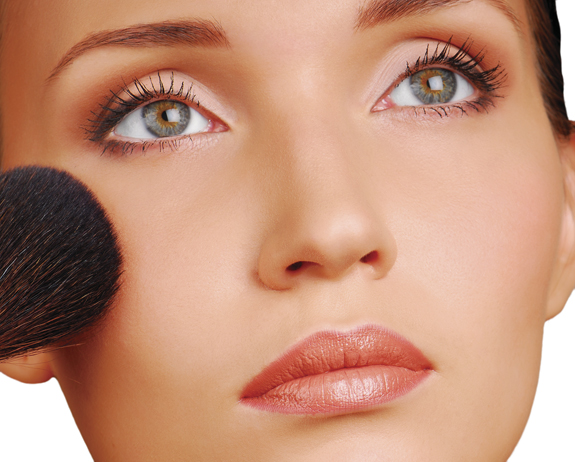
Properly applied make-up is not a fixing tool, but a balancing tool. Women wear make-up, not to "fix" their features, but to balance them out.

Foundation is used to balance skin tones. Women that rely on foundation often have splotchy skin or acne/acne scars. Foundation is used to balance out these colors and make the woman look healthier. Properly applied foundation cannot be seen. It is when too much or the wrong color or both is applied that foundation becomes an issue.

Mascara is used to widen eyes and lengthen eyelashes. Women that wear the proper amount of mascara often have short eyelashes, light eyelashes or blonde-tipped eyelashes (like me). Properly applied mascara is not chunky or thick. The mascara color flatters the eye color and doesn't drastically change the eyelashes. I use black mascara because my eyelashes go from very dark to very light. Wearing black mascara, for me, is just an extension of the dark part of my eyelashes. Women with light eyelashes should use browns. Mascara is incorrectly applied when the eyelashes are thick, chunky and look like a pencil can balance on them.

I could go through every type of make-up, but I won't. Every type of make-up is the same. Use the colors appropriate for the colors of your face and use them sparingly. Make-up choices should also be based on the formality of an event. (More make-up is acceptable at more formal events. I will probably get more into that in a different blog post.) It will make you look more confident and like you know what you're doing.

That's not even just an opinion. I read a wonderful article this morning that quotes a study performed at Harvard University that says the same thing. (The article talks about more than make-up. You should read it.)

In this study, people were shown pictures of women wearing no make-up, light make-up, and heavy make-up. The people responded with their first impressions of each woman. Women wearing light make-up looked more competent, trustworthy, and like-able than women with no make-up. Women wearing heavy make-up were still considered attractive, but they looked untrustworthy.

If this is true, then why do so many people have an issue with people wearing make-up? Well, I have a theory. I don't know why some women hate make-up. However, I think the make-up-hating men are victims of our culture.

Throughout history men and women have worn make-up. Especially when the world was run by nobles, the difference between male and female fashions, make-up included, were not that different. Starting in the mid- to late-eighteenth century, fashion for men became more "masculine." The middle-class started to rise at this time. Men went to work, women stayed home, and fashions started to emphasize these roles.

By the 19th century, an early business suit was the thing for men to wear. It was the uniform of a successful working man. As the working class became more important, make-up for men disappeared. Working men didn't have time for that nonsense. If a man wore make-up, he was soft, feminine, and not cut out for a world run by business.

So now make-up is just for women. With women and men filling the same roles in today's society, more men are starting to dislike make-up. Why? Because women can be successful in the work place and still wear make-up (therefore staying feminine). It's against the culture the developed world has been ingrained with for the past few centuries. These people against make-up say that it makes a woman look fake. I propose, however, that it is more a conflict of culture and reality than a perception of fakeness.