Showing posts with label personal style. Show all posts

Thursday, March 6, 2014

Parts of Fashion: Expression

The second biggest part of fashion is expression. This is really a subset of comfort, but that's why comfort is the biggest aspect of fashion. In order for clothes to sell, they have to make a person feel like they are expressing themselves. There are several different ways people express themselves with clothes.

Casual Expression

Just because you look fine doesn't mean you feel fine.
For a lot of people, especially those who are still in school or only work part time, casual expression is the most common type when it comes to clothes. This is what you wear when you aren't working. This type of expression is different for everyone, though it is rather similar in concept. I have three examples of different types of casual expression.
  1. When I was a senior in high school, one of my close friends stopped wearing graphic tees. She would still wear jeans, but she always had her hair and make up done and wore blouses. She said she decided to treat everyone like a future employer, so she didn't want them to see her wearing anything that could compromise that relationship. While she dressed nicer than most other high school seniors, she still had a level up for business wear.
  2. A long-time friend and former roommate of mine is most commonly seen in jeans, a graphic tee and Converse that almost don't count as shoes anymore. She always looks comfortable. A lot of people think she's a tom boy, and she can act that way sometimes, but she also likes make up (though she doesn't have time to put it on most days) and other girly things. The point is that she doesn't dress to impress other people on a day-to-day basis because she doesn't feel the need to. She has a comfortable, laid-back personality and that's the way she looks.
  3. I have several friends who will change level of formality for no apparent reason (and I'm included in this group). These friends will wear a funny t-shirt one day and a collared shirt the next. They may even switch between jeans, shorts, khakis and slacks. I have found that this group is the most common group. Everyone has their own reasons for doing this, but I think it's generally pretty similar to why I do it. I dress in accordance to my mood. While I try to always look nice, some days are graphic tee days and others a blouse days. Who I am seeing that day usually doesn't effect what I choose to wear (if it's a true casual day). I always try to look like I took at least a little time with my appearance. However, if I'm having an "I don't care, I just want to wear something" day, I'll grab a graphic tee. If I'm having a low self-esteem day, I'll grab something nicer and more flattering. When I was single, I would usually wear something a little more flattering if I was going to see the guy I liked, and I still do this when I want to distract my husband (cause it's so fun), but I don't wear anything that I think looks bad, so who I am seeing doesn't tend to change what I wear. Most of my friends that switch formality for no apparent reason seem to do the same thing.
Casual expression is the form of expression that is least thought about. Most people don't even think about what they're trying to say with their clothes on a regular basis. This comes as second nature to most people. Even people who say they don't care about clothes do this. They have reasons they pick their clothes. All you have to do is dig a little and they'll realize it (we did this as an assignment in one of my classes last year).

Business Expression

Business expression is the most
effected by the opinions of others.
I hope that this is a no-brainer, but I'm not so sure based on some of the "business attire" I've seen in my classes. If you're going into any type of business, you need to figure out what the dress code is. Then you can channel your personal expression through that code. The point of business attire is to impress your employer, or future employer if it's an interview or sit-along. The hard part with this type of expression is keeping your identity, which is why I think so many people don't like dressing up. I have some tips for keeping expression in this world so you don't feel lost in the crowd.
  1. Find expression in your hair or accessories. Most places that require a uniform will let you wear things like rings or earrings, so this works for most fields. Find an accessory identity. Maybe you're like me and a simple ring on one finger is enough for you. I didn't get my ears pierced until I was 16, so I got used to wearing minimal jewelry. I always had a simple ring on my left middle finger and a watch (often a bold one). I feel naked if I forget my ring (which is now a wedding ring) and watch. I also try to have unique hair. I get bored with my hair easily, so I get it cut a lot since I don't want to dye my hair. Perhaps you find identity in your hair with a dye job. That's up to you, it's your identity.
  2. Find tops with flair. In most business attire slacks are appropriate. However, slacks are boring. Tops do not have to be boring. If you're a man, bright colors and interesting patterns are a great way to add some flair to your look. For women, find tops with ruffles or applique or patterns. Blouses come in all styles. You may be bored with your pants, but there's no reason to be bored with your shirt.
  3. Get some fun socks. This, of course is reliant on your shoes. If your shoes aren't sock appropriate, get some fun shoes. My favorite shoes are black and white hounds-tooth flats with a big, flat, black bow on the toe. My favorite socks look like popcorn boxes. Fun socks can be hidden by pants and fun shoes come in business appropriate styles. There is no excuse not to have fun feet.
It's OK to conform to dress codes. Very few dress codes are so strict that they will take away all your forms of identity.

Formal Expression

Formal expression is a lot like casual expression. You get to pick what you're saying with what you're wearing. Red carpet is a great example of this. You can tell which celebrities like making a scene, which ones want to be seen as classy and which ones are incredibly comfortable with their bodies based on what they're wearing. This form of expression is basically casual expression dressed up, so I'm not going to elaborate.

Alexander McQueen is one of my favorite designers
because of the expression I see in his clothes.
Designer Expression

The fashion industry isn't just concerned about the expression of the consumers. Yes, a consumer must find expression in the clothes in order to want to buy them, but the designer has to find expression, too. If you commonly buy your clothes at Walmart, this form of expression is incredibly watered down, but it's still there. At some point in time, a designer had to be inspired by a style in order for it to be created in the first place. Designers are artists, or they should be (the good ones are), so when you buy clothing, you're wearing someone's art. While this form of expression is incredibly important, the designers that survive are able to channel their expression into something that consumers will also find expression in.

It doesn't matter if you wear non-descript clothing or incredibly flashy clothing. What you wear is your outward expression of your personality. If a piece of clothing doesn't fit with your personality, you're most likely not going to wear it. In fact, you probably won't even pick it out at the store.

Tuesday, February 18, 2014

Parts of Fashion: Comfort

I've decided to do a series of posts of on what I view as the most important parts of fashion, starting with the most important, comfort. Comfort is the number one reason people choose the wear what they wear. Keep in mind, this is wearing clothes, not buying them. Many people, I might even say most, buy clothes that are cute, cool, super chic, whatever, and leave them to hang forever in their closets, never to be worn. Tim Gunn calls these clothes "Those Items that -- For Reasons Unknown -- You Never Wear" in his book A Guide to Quality, Taste & Style. I would say that there is one reason. You don't feel comfortable in it.

There are different types of comfort. Some types may not apply to some people, all may apply to others. I may not even know all of them. Sure, I analyze clothing and why I wear what I wear, why others wear what they wear and why certain styles stick and others don't, but that doesn't mean I have figured out every type of comfort. I am a mostly self-taught when it comes to fashion theories. I do think I have a good start on the list, and I'm open to other ideas.

  1. Mental comfort. A huge part of fashion is self-expression (which I will go more in depth on in a later post). Since self-expression is so big, it only stands to reason that, if a piece of clothing does not accurately represent you, you will not want to wear it. A lot of people don't seem to think about what their clothes say about them, but I think it's because it comes naturally to people...because of comfort...no way.

    To test this theory, I would talk to people I didn't know very well (aka was sitting next to in a class), and tell them about a fashion class I was taking. I would bring up how clothing is our first form of communication, that what we wear is an expression of ourselves and you can tell a lot about a person just based on their clothes. Most of the time the person would look at me skeptically and ask me what their clothes say about them, if they are so telling. I would then tell the person my first impression of them, which was based on their clothes (as most first impressions are. I call it the first-first impression). The people I talked to were always impressed at how accurate I was.

    I concluded, based on my experiment as well as studies and books I've read, that people automatically wear clothes that make them mentally comfortable.
  2. Situational comfort. There are clothes that are made for certain events. An evening gown is not typically worn to work and athletic clothes are not normally worn on dates (unless it's an athletic date). Some clothes are made to cross events, but only with a change in combination. People generally do not want to under- or over-dress, even if it happens more often than anyone wants to admit.

    Imagine you're having a pick-me-up day. You're not feeling so hot and you want to feel better about yourself. What do you wear? Does it depend on how you're making yourself feel better? I bet it does. If you pick yourself up by binge watching your favorite TV show while chowing down on snacks, I doubt you are wearing the outfit that flatters you the most. No one else is going to see you, so you wear whatever you want. If you're the type of person that needs to get out of the house to feel better, I would wager that you are wearing a casual outfit that you feel the most attractive in. Perhaps you go somewhere fancy when you feel bad. You're probably wearing your nicest outfit. Each situation calls for a different outfit.

    Now imagine you're going to work. What do you wear? A uniform? Casual clothes? Clothes that can get dirty? Traditional business attire? Trendy business attire? Does it depend on where you're working? Of course it does. Would you feel uncomfortable coming in something else? I would say most people would say yes.
  3. Physical comfort. This one, I think, is the most obvious. No one wants to wear something that's itchy or pulling funny or falls off all the time. OK, maybe someone does, but I can't understand why. I don't think this needs much explaining. The best example I can think of is, when people are adamant that fashion means nothing, they always say "I just dress to be comfortable." Upon further prying, they usually mean physically.
While I may have spent this entire post talking about personal fashion, it can't be denied that this plays a big part in the fashion industry. It doesn't matter how innovative, cool-looking, awe-inspiring or awesome a piece of clothing is, if no one will feel comfortable in it, it won't sell and the item will disappear from the shelves. Comfort is the biggest aspect of personal fashion, but it does not completely make up personal fashion, which is why there will be more posts to follow!

Wednesday, November 7, 2012

Style is the definition of you

I got engaged recently and, like many engaged women, I've been looking at wedding dresses. Even before I got engaged, I knew I'd have a hard time finding a wedding dress. I'm not a huge fan of trains, but I don't think column dresses are so great for a wedding. I rarely like lace, I don't like wedding dress beading, and I am not a fan of shininess on dresses. I will not wear a dress that has bows or flowers on it. I want a long sleeved dress and I want it simple yet stylized. Clearly, I'm not an easy woman to shop for.

Why blog about my laments in regards to wedding dresses? Because I've been thinking about my style. I love my style. It is me and no one else. Sure, I wear things that other women would wear and I may even have some pieces of clothing that aren't particularly unique, but that's not what's important. What's important is what I tell people with my clothes, hair, make up, etc.

It's very important to me that I never look like a slob. I want to show people that I'm well put together and can think for myself. I don't ever want to look matronly but I refuse to show more than I deem appropriate (which isn't very much). I want people to look at me and know that I can get the job done. What job? I don't know, but I want people to think I do and that I can do it. I have anxiety about not dressing appropriately for occasions and I live by the rule that it's better to be over dressed than under dressed.

I think it's very important for everyone to care about their personal style. I don't think everyone needs to be a fashionista or even fashion forward. However, your clothes will say something about you whether you want them to or not. There are two serious style issues that I wish to address.

First, there are people who will never dress their age. I see this a lot in Utah and, as my friends can attest, it drives me nuts! One of the things that bugs me the most about living in Utah is the fashion of mothers and daughters. (Note: This is not every single family, and it's not only in Utah. There's just an unusually large population with this problem in Utah.) It's quite hard to tell the difference between many mothers, daughters, and, sometimes, grandmothers (shudder) from looking at clothes and hair in Utah. If the daughter dresses her age, the mother dresses the daughter's age as well. If the mother dresses her age, the daughter dresses the mother's age. I am a huge fan of age appropriate clothing.

When you are a teenager, you have a fundamental right to dress like a teenager. While it doesn't look very good, you can experiment with layering and wearing sweats with Uggs. Teenage years are a time for you to find your style. Experiment with clothes, figure out what looks good on you, what you like and what you don't like.

Mothers, middle-aged women, grandmothers, male equivelants of these labels, please let the teenagers be the teenagers. You can be stylish and still look like the mature person that you are. High fashion is there for you, if that's what you're interested in! There are plenty of clothing lines directed at you that are fashionable, fresh, beautiful, anything you're looking for in your clothing. You don't need to dress like a teenager to look young.

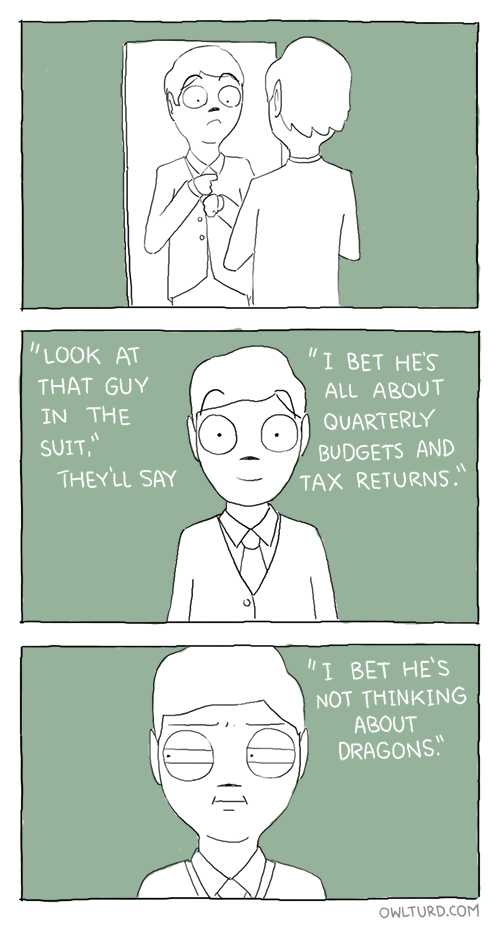
The other problem is people who refuse to admit that clothes define them. This is a delusional lie. Clothes will always say something about you. Clothes don't have to define you. Notice the title of my post. Style is your definition. Do you see the difference there? You have the control. When you decide that clothes don't matter and just throw on anything, people will see that you don't care. That's a horrible first impression. It's important to understand that style does not mean fashionable. If you, for some reason, are against fashion, then wear classics or something, but don't stop caring. That's a horrible practice. You don't have to be as obsessed with clothes and design as I am, but you should care about what you look like. Don't look like a hobo.

Now about wedding dresses, I want my style to show on my wedding. I may get lucky and find a dress that I love. However, I have planned for this and know how to make patterns. Dress designing, here I come!