Tuesday, January 26, 2016

Modesty is an attitude

I have been struggling with modesty recently. I have had a testimony of modesty for a long time, so when my body started working against the standards of modesty I try to uphold, it was very hard for me. I started having questions and I did not know where to find the answers.

What is the relation between dressing modestly and acting modestly? Are they the same thing or is it a word with two definitions? If it's two definitions, where's the relationship?

It wasn't until I read 1 Timothy 2:8-10 that I started to understand the answer. Turns out I didn't know what the scriptures have to say on this subject as well as I thought I did.

8 I will therefore that men pray every where, lifting up holy hands, without wrath and doubting.
9 In like manner also, that women adorn themselves in modest apparel, with shamefacedness and sobriety; not with broided hair, or gold, or pearls, or costly array;
10 But (which becometh women professing godliness) with good works.
(Emphasis added)

First thing I noticed, is that verse nine is one of the verses often associated with sexism in the scriptures. However, I also noticed that it was in the middle of a thought. Here is how the thought is broken down if just read without connecting the parts or viewing it as one complete thought:

  1. Men need to pray
  2. Women need to dress modestly
  3. Women should not wear costly apparel 
  4. Women should wear good works instead
That just does not make sense. First off, and most blatantly wrong, is that you cannot wear good works. Secondly, if this passage is just addressing modesty, why is modesty compared to praying and having holy hands?

This is when I remembered a chapter from a book I once read. As research for a paper about ideal body types throughout the ages, I read a book written in the mid 1800's about being a lady. The author spent an entire chapter on out-dressing other women. Essentially he spent a chapter telling women that people can tell when you over-dress for attention. He told women not to compare themselves to each other, especially by how others are dressed. He said it is unflattering and a waste of time.

Sound familiar? I've heard these things said by people who are still alive and born within the last half-century. If it's true that women compare themselves too much today, and it was true in the1800's, I'm not too concerned with the idea that it has been true for a very very very long time.

Perhaps Paul was not trying to tell women what to wear and what not to wear, but was trying to tell women where to put their priorities. Perhaps he was saying to focus on your good works instead of what you're wearing. Paul did announce himself a preacher, apostle, and teacher in verse 7. Wouldn't it make sense that he would be trying to teach a lesson instead of just telling people what to do?

The lesson I learned from these verses is that, like men having "holy hands" by not showing wrath or doubt with each other, women should also have "holy hands" and be more concerned with people recognizing that in them than with how they are dressed. In other words, a woman should strive to be described as a good and charitable person before being described as fashionable. A man should strive to be described in a similar manner without being described as wrathful and contentious (as taken from the foot notes for doubting in the LDS printing of the KJV). Therefore, modesty is more of an attitude than about how you look or dress.

But if that's the case, why is dressing modestly talked about so much and why are there specific rules? First off, it's important to remember that there are rules that apply to both men and women, though they may be different. It's also important to realize that modesty standards vary from denomination to denomination within Christianity. I also find it very interesting that most religions have a modesty standard.

I am Mormon, so I cannot speak for why other Christian faiths have their modesty standards, if they do hold specific ones. I can, however, speak as specifically as I can for the Mormon standards. First I'll go through the general modesty rules for both men and women.

Men
  1. Thighs should be covered.
  2. A shirt should be worn.
  3. Shirts should have sleeves/Shoulders should be covered.
  4. Shirts should not have low-cut collars.
Women
  1. Thighs should be covered.
  2. A shirt that covers the torso should be worn.
  3. Shirts should have sleeves/Shoulders should be covered.
  4. Shirts should not have low-cut collars in front or back.
You many notice that I just described the outline of LDS temple garments. I did, and part of that is because we have been told to completely cover our garments with our clothing. However, those who want to one day enter the temple should also try and dress this way, and I will get to why later. First I will address why we are instructed to dress modestly in the first place. 

In 1 Corinthians 6:19, it says "Know ye not that your body is the temple of the Holy Ghost which is in you?" Our bodies are often described as temples throughout the scriptures and even more often by the General Authorities of the Church. We should treat our bodies with the same reverence and respect as we treat the temples. Elder Hales said, "When we recognize our bodies as the gifts they are and when we understand the mission they help us fulfill, we protect and honor them by how we act and dress."

My previous blog post on modesty is entirely dedicated to this idea, so I will not venture further into this aspect of why we dress modestly. It is now time to address why the modesty guidelines are the way they are.

As stated in the video released by the LDS Church, temple garments are sacred and symbolic. We believe that they provide us with a promise and a protection when worn worthily. Just as those striving to enter the temple are asked to live in accordance to the standards that they will be held to after attending the temple (often referred to living a "temple worthy life"), they should also be dressing as if they have already made the covenants to receive their temple garments. As stated previously, the temple garments are symbolic. By covering them with our clothes, that symbolism is extended to our bodies, making them more sacred and symbolic as well. We should care just as much about this aspect of temple-worthiness as we should about all the others.

I will end this rather long post with some of the conclusions I have drawn from coming to understand this principle.
  1. Our bodies cannot work against our modesty. I do not know many men who struggle with this, but I do know women who have personally struggled with this or who have been the subject of criticism because of it. If you have large breasts and cannot seem to cover your cleavage, you are okay. You may show massive amounts of cleavage in anything but a turtleneck, but God understands. The important thing is that you are not trying to use your body as an object. Same goes for women with very long legs. Things that would normally hit a woman at or below the knee may not quite reach your knee. God understands your struggles as well. He does not want His children to be uncomfortable for the sake of meeting cultural standards. As long as you are meeting His standards, you are doing fine.
  2. Modesty has nothing to do with sexuality. A woman, or man, it goes both ways, can dress as modestly as they come and someone can still look upon them lustfully. Modesty is not for other people. It is for yourself. The only time it can be argued that it is for other people is by showing respect for others by dressing appropriately for whatever your setting may be. It is never to "keep the boys pure." (Or girls pure. It is an outdated idea that women do not have those thoughts and desires as well.)
  3. Modesty is very personal. No one should expect anyone else to hold themselves to the modesty standards of their religion. If you do not share beliefs, then what is immodest to you may be modest to them.
  4. Modesty should not be taught based around how we should be dressed. First off, it's disrespectful to the sacredness of this principle and, secondly, it leads to the perpetuation of the idea that modesty is more for women than men. The only reason why modesty is taught so differently to women than men is because there is a larger variety of clothing styles for women than men. Modesty should be taught the same way to both women and men, or boys and girls, whatever age, I don't really care. Young men need to understand why modesty is important just as much as young women.

Saturday, May 30, 2015

6 Things All Mothers Should Know About Nursing

Before my son was born, I was excited to breast feed. I was excited to bond with my son and share that time with snuggling and love. Then my son was born. Nursing was not fun. I dreaded doing it. My son would rather have a bottle so he could continue scanning the room than nurse where he could only see me. I felt like I was failing. I hated going to the Mother's Lounge at church where all these other mothers would be in and out with happy, satisfied babies while I sat there fighting mine. Don't get me wrong, I would do it again. Nursing is free and it benefits babies so much. That does not mean I would enjoy it the second time, at least not if I had to do it over again with the same baby.

I read a lot of Mommy blogs. I've been looking and looking for another mother I could relate to. Someone else who doesn't love nursing. I knew I couldn't be alone; my mother didn't enjoy nursing one of my siblings. I never did find someone who currently had a baby to sympathize with, though. So here is my advice to all those mothers out there like me who just want to know that they're not alone.
  1.  Do what comes naturally to you, not what you've been told.
    When I was in my third trimester I was required to go to a lactation consultant. I was informed that cradling the baby in your arm is wrong and doesn't work. I was confused and I thought that was crazy, but I was told this by multiple lactation consultants. I was told to do it this way:
    This may work for some people, but according to Dr. Spock, most babies hate having their heads held. If I had only known this in the hospital, my son may have latched the first time and never have had to go to the NICU for low blood sugar. The thing is, as soon as I held my son in my arms I knew I needed to cradle him. But because I had been told so many times to do it the other way, I didn't. My son didn't latch. He barely got anything to eat. Within a few hours he was in the NICU.
    One thing I've noticed about all things natural is that we seem to know how to do them instinctively. It's easy to get intimidated by nursing, but when it comes down to it, you know how it works. Getting advice is great! I'm sure lactation consultants have helped someone. But if you feel uneasy about what you've been told on how to nurse, listen to that. Do what seems natural to you and it will probably work for the best. 
  2. You are not a giraffe.
    I recently saw this picture in my news feed from the La Leche League. The home page for the League in the area I live in starts with this: "La Leche League is an international nonprofit, nonsectarian organization dedicated to providing education, information, support, and encouragement to women who want to breastfeed."
    Harmless, helpful, good. The reason why this group exists is great! But pictures like these ones are far too common, and not exclusive to this group. Groups that are meant to help mothers should not be alienating those that do have to wean for various reasons. Humans are not giraffes. Most women cannot take their children to work with them. While many professors do allow children in their classrooms, most student mothers, especially of infants, choose not to because you end up in the hall half the time anyway and are a distraction to the rest of the class, even if you try really hard not to be. Giraffes can nurse anywhere. Humans cannot.
    I may have too personal of an experience in terms of mobility. My son self-weaned at about 10 months. There was nothing I could do about it because I was in my last semester of school and worked at two jobs in law enforcement. I could not pump enough (I was lucky to get 1 ounce after 45 minutes of pumping). I felt alone and pictures like these pour salt in the wound. Mothers that have not had a child self-wean could not possibly know how it feels when your child adamantly rejects the one part of your body specifically designed to care for them after birth. And when you're not able to be home very often to work on a remedy, you just have to accept it.
     People are not going to stop saying things like this. Parenting is a hot topic and probably always will be. It's very hard, but that means it's up to individuals to not compare ourselves. And when we're talking to other mothers, we need to remember that just because something is an excuse to you doesn't mean it's not a reason for someone else.
  3. 9 out of 10 women can nurse; that doesn't mean your baby will.
    The local WIC (Women, Infants, and Children) office is covered in signs that say "9 out of 10 women can nurse." Every time I go in there I think, but what about babies that don't like nursing? There are just some babies that are not fans of nursing! Nursing these babies takes a lot of time and patience. They will suck a couple times and then throw their arms back and cry until you can coax them back in. Eventually the crying will stop, but that baby will continue to push away before filling up. 
    My son was like this and I've been told by older mothers about their children who did this. All of these babies didn't want to stop and eat, even after they grew up. My younger brother was one of these babies and he has said on occasion that he wishes there was a pill he could take instead of eating, simply for the convenience of it. My son, now 1-year-old, will sometimes refuse to eat until I put his tray on the floor so he can just come back to his meal as he plays.
    Let me make it very clear, you can nurse babies that don't want to nurse. But your baby will not want to nurse at any age and it takes a lot of will power not to get frustrated. Nursing won't be enjoyable for you and meal time is a terrible time to try and bond with your child. Don't take it personally. There are other ways to bond with your child. Nursing doesn't have to be one of them.
  4. Sometimes you just have to buy formula.
    There are so many things that can happen to you while you're nursing. You can get sick, you can require surgery, you could need a skin tag removed on your nipple. Two of these things happened to me while I was nursing. When you have the stomach flu and can't eat, your body is NOT going to produce enough milk, no matter how hard you try. 
    I have heard so many avid breast feeders talk about the harms of formula and that there's no need to buy it because there are women who donate breast milk. So it can be very easy to feel judged when you're in the check out line buying some formula. But it's ok. When your baby is starving and you can't make enough milk, formula can be your best option. It's faster to go to the baby aisle at the grocery store and pick some up than to figure out the process of getting breast milk.  
  5. Your body doesn't always produce everything you child needs, no matter what anyone else says.
    This is really a continuation of number 4. But this time I'm not talking about something happening to you. This is mostly for right after birth. It could also mean that you are pregnant. I do know of mothers that had to supplement with formula because pregnancy decreased their milk supply.
    As I've mentioned before, my son was in the NICU for low blood sugar within a couple hours after birth. As soon as he was transferred there, a lactation consultant came in my room with this scary looking contraption. It was a breast pump. I don't know if you've ever seen a hospital-grade breast pump, but they are way more intimidating than a home pump. She explained to me what it was and how to use it. Then she insisted that I begin pumping right away, before she had even left the room, so I could "have enough milk to take to the NICU before they give him formula and ruin him to the breast forever." 
    Let me put this craziness in perspective for you. I had given birth less than 8 hours earlier. My son had yet to latch very well, so he had not eaten very much yet. That also means there is no way my milk had come in. I was still producing colostrum. My son had such low blood sugar that we actually had to supplement with formula until my milk came in by doctor's orders. On top of that little oversight by this persistent unwanted visitor, I had been at the hospital for over 24 hours (most of which was in labor), so I was not in the mood. There was no way I was going to do this in front of this lady. So, of course, she had to tell me all the horrors of formula. 
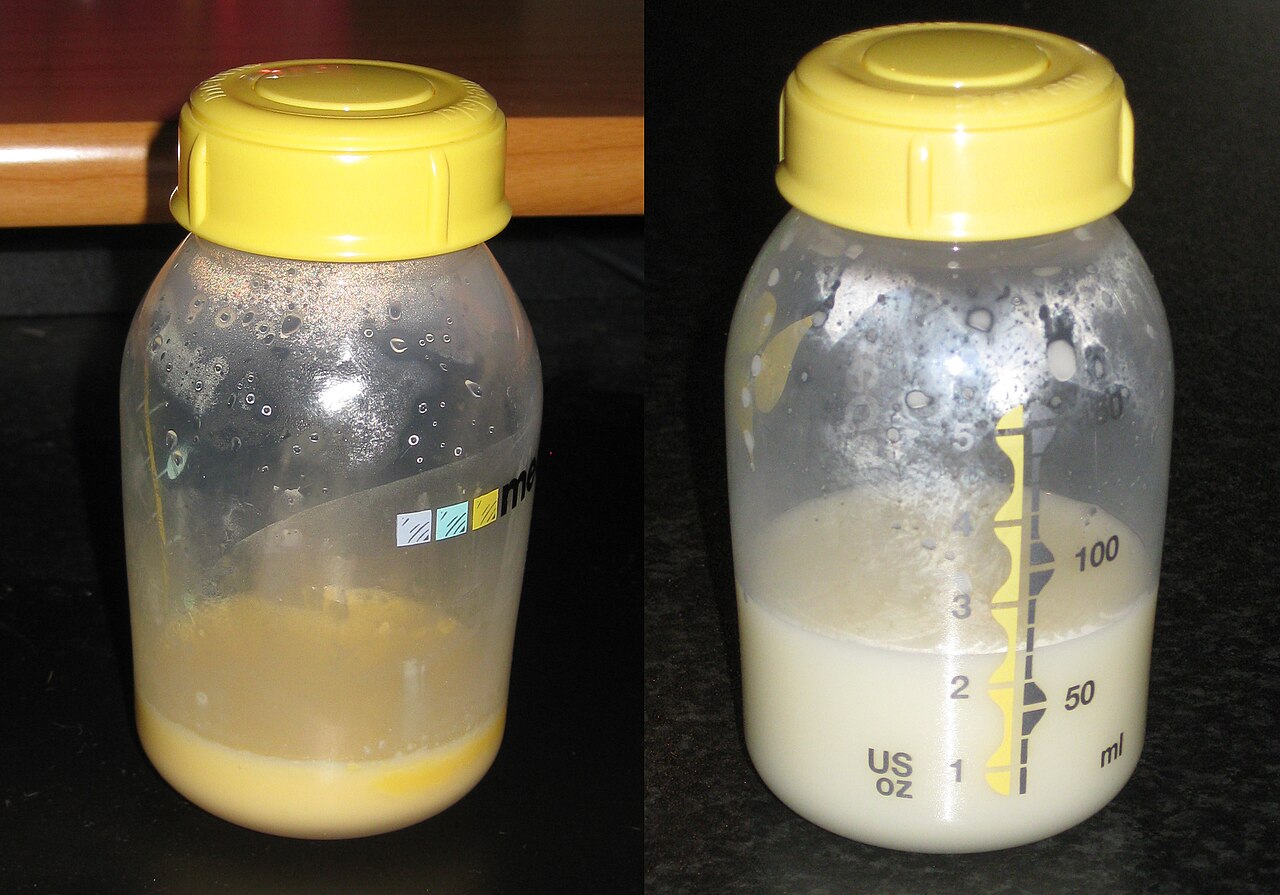
    Before breast milk comes in mothers produce this sticky, yellow stuff called colostrum. Colostrum is high in carbohydrates (sugars), protein, and antibodies. It is wonderful stuff and great for the health of newborn babies. According to my son's doctor, when babies are very small and have low blood sugar, colostrum is not enough. There just isn't enough colostrum to raise the baby's blood sugar to a healthy and safe level and maintain it. 
  6. Do what works best for you and your baby.

    No one knows what's best for your child better than you. If nursing is just a terrible experience and you just get mad at your baby, maybe formula is the better option. No one has any right to tell you that you're doing it wrong. No two babies are identical and so no two parenting styles should be identical. People will tell you what you're doing wrong and what you should be doing. Pay them no attention. You're doing great.
 

Sunday, July 27, 2014

There's a time to talk and a time to love

The "in thing" to share among my Facebook friends lately have been pleas. From one side of an issue or another, people have started writing pleas for people to join them/not leave them. It's a little refreshing from what I used to see, which was "why you are wrong" type posts. I still see that, especially with friends who read The Matt Walsh Blog regularly, but not nearly as often. So, yes, it's nice to see people being a little more pleasant towards each other, but it's still pointless.

When it comes to matters of the heart (relationships, religion, anything that can't be proven), it's incredibly hard to change someone's mind. Once you're set, you're set. Nothing anyone else can say will change that. What these types of blogs are asking of their intended audience is something that the writers themselves aren't willing to do. So there are really two problems with this. First, it's a post intended for an audience that, for the most part, does not make it a habit of reading those types of blogs. Secondly, it's asking the impossible.

Marketing has a general rule that you sell to the swing group through the eyes of the love group. The rule totally ignores the hate group. Why? Cause the hate group isn't going to change. What you're doing when you try to win back some one who has "fallen away" from whatever it is through reason and facts is trying to change the minds of the hate group. If anything, it's going to push the hate group farther away because they'll most likely feel attacked. 

When religion is involved, which it is for 95 percent of the blogs I'm talking about, sometimes it's hard to distinguish between the swing and the hate group. However, a plea to stay won't usually work for either. At least, not the pleas I've seen. I've only ever seen two things work with religious swing groups.
  1. The facts. Some people, especially those like me, respond best to the facts of an issue. They lean towards one side because the arguments made by that side are easier to understand and make at least a little sense. They can lean to either side based on the answers to their questions, eventually joining with one group or the other. This is why you need to know your religion. While facts may change from religion to religion, you must be able to share what you believe in an understandable manner. I strongly believe that this means you have to ask questions yourself. Ask questions, hard questions, and seek out the answers. Once you've done this you'll be able to give better answers to those who are asking.
  2. The love. Sometimes people just need to be shown a little love. Not told, shown. This is the most important way to help those struggling to understand. Lovingly answer questions. Don't make it seem like asking questions is wrong. There are never any stupid questions. Don't judge. If someone says "You're just going to say that I don't understand" don't say it. Even if that person has the facts wrong, don't say it. It won't help. Just love them. Because people should be loved.
Brii and Erica were two of the people that helped me feel the love.
I can witness that a combination of facts and love can do wonders for a person. I was once in the swing group. Yes, I was young, but I was old enough to ask questions and find and understand the answers. It was when I was moving from Primary to Young Women's. I was the oldest in my age group and there were a few years between me and the next youngest girl. It just so happened that the time I started searching for the truth was also the time when I felt the most alone. I couldn't seem to make friends with the older girls. In fact, it felt like the older girls didn't care at all that I was always by myself. It got to the point where I dreaded going to church. The answers I was finding to my questions didn't matter. I knew the answers were good, and that I should be leaning towards the love group, but I wasn't. I was constantly telling my parents that I was too sick to go to church activities and I remember fake sleeping until the rest of my family left for church on several occasions. Then Erica graduated into Young Women's. I had a friend again and I could suddenly feel the love of my leaders. That was what got me to stay. I had the facts, I knew them to be true, but without the love I never would have stayed because I didn't feel wanted before then. 

When anyone, an individual or a group, is threatening to leave, don't talk them to death. Don't answer the questions they haven't asked. You can't read their minds. Yes, your heart is in the right place, but that's not what is needed. A blog post gone viral isn't what is needed. Love is needed. Understanding is needed. The time to talk is done. The time to love has reached its most critical point. 

Friday, May 30, 2014

Life is a dress code: Thoughts on Wasatch High School

The internet has recently discovered modesty photo edits in a Utah high school year book. While I am shocked that this happened, I am disgusted at some of the comments made on the internet. Somewhere dress codes became evil and problematic. Maybe I'm just traditional, but I think dress codes in schools teach students an important lesson.

The world is full of unspoken dress codes. If you're looking to impress in a job interview you dress a step higher than what is worn at the office. You don't wear jeans on a hike in the middle of summer. You wear light-weight clothes to the beach. You wear something between nice jeans and shirt to traditional "Sunday best" to church. You wear dark colors to a funeral. You don't wear white at a wedding (unless you're the bride, of course). Any situation you find yourself in comes with a dress code.

I may have overdressed him for bed
in his baby tux, but dang was he cute.
Something a lot of young people struggle with is knowing what is appropriate to wear when. If anyone can make it through adolescence without being over or under dressed at some point they deserve a gold star. Now young people are hearing from those barely older than them that it doesn't matter what you wear. Yet so many of these slightly older young people are without jobs, or at least jobs that you can actually live off of.

Now, I'm not saying that if they dressed better they'd get better jobs just like that. There's obviously way more factors to it, but I am willing to bet that the job search would be a little easier for quite a few of them if they would just dress a little smarter.

Smarter? Dress smarter? How do you do that? You don't wear something super trendy to an interview with a non-trendy employer. You pay attention to what is worn at that office when you do your research and dress one step up. When in doubt, traditional business dress will rarely go wrong.

Here's an example of why you need to dress the part sometimes. My husband works as an un-benefitted employee at a hospital. He works on a different unit every day. He happens to be particularly liked by the patients and staff on the children's unit, where he wants to work all the time. When a position opened up, he wore nice slacks and a button-down shirt to the interview. At the rest of this hospital, this attire is perfectly acceptable. Well, even though my husband seemed to be a shoe-in for the job, he didn't get it. Another position on the unit opened up recently and he noticed some of the benefitted employees who wanted the shift putting on suits (not normal in the rest of the hospital). Now, when he interviews for the position, he knows he needs to dress up even more if he wants the job.

Teenagers need to learn that there are dress standards that they will have to meet for the rest of their lives. Unfortunately, many don't get this instruction from parents. I think it's just one of those things that many parents don't think about. Many teenagers do get this instruction from their parents, but ignore it. Dress codes at schools help teach students that there is, in fact, dress standards in this world and if you don't follow them there can be consequences.

Before anyone thinks I'm defending the actions of Wasatch High School, let me clarify. It is never ok to enforce a dress code through unauthorized photo edits. A dress code is only effective as long as it is enforced when the clothes are being worn and on everyone. Also, dress codes should apply to both guys and girls. I don't know if there is a section of the Wasatch dress code for guys, but if there isn't, there should be. I do not think telling a girl to cover her bra straps or cleavage or butt cheeks (let's be honest, short shorts at school just have to be uncomfortable anyway) is telling her that she needs to control men's thoughts. I think it is telling her that you need to dress a certain way in a certain place. Same thing for guys with saggy pants and muscle tees.

Thursday, March 6, 2014

Parts of Fashion: Expression

The second biggest part of fashion is expression. This is really a subset of comfort, but that's why comfort is the biggest aspect of fashion. In order for clothes to sell, they have to make a person feel like they are expressing themselves. There are several different ways people express themselves with clothes.

Casual Expression

Just because you look fine doesn't mean you feel fine.
For a lot of people, especially those who are still in school or only work part time, casual expression is the most common type when it comes to clothes. This is what you wear when you aren't working. This type of expression is different for everyone, though it is rather similar in concept. I have three examples of different types of casual expression.
  1. When I was a senior in high school, one of my close friends stopped wearing graphic tees. She would still wear jeans, but she always had her hair and make up done and wore blouses. She said she decided to treat everyone like a future employer, so she didn't want them to see her wearing anything that could compromise that relationship. While she dressed nicer than most other high school seniors, she still had a level up for business wear.
  2. A long-time friend and former roommate of mine is most commonly seen in jeans, a graphic tee and Converse that almost don't count as shoes anymore. She always looks comfortable. A lot of people think she's a tom boy, and she can act that way sometimes, but she also likes make up (though she doesn't have time to put it on most days) and other girly things. The point is that she doesn't dress to impress other people on a day-to-day basis because she doesn't feel the need to. She has a comfortable, laid-back personality and that's the way she looks.
  3. I have several friends who will change level of formality for no apparent reason (and I'm included in this group). These friends will wear a funny t-shirt one day and a collared shirt the next. They may even switch between jeans, shorts, khakis and slacks. I have found that this group is the most common group. Everyone has their own reasons for doing this, but I think it's generally pretty similar to why I do it. I dress in accordance to my mood. While I try to always look nice, some days are graphic tee days and others a blouse days. Who I am seeing that day usually doesn't effect what I choose to wear (if it's a true casual day). I always try to look like I took at least a little time with my appearance. However, if I'm having an "I don't care, I just want to wear something" day, I'll grab a graphic tee. If I'm having a low self-esteem day, I'll grab something nicer and more flattering. When I was single, I would usually wear something a little more flattering if I was going to see the guy I liked, and I still do this when I want to distract my husband (cause it's so fun), but I don't wear anything that I think looks bad, so who I am seeing doesn't tend to change what I wear. Most of my friends that switch formality for no apparent reason seem to do the same thing.
Casual expression is the form of expression that is least thought about. Most people don't even think about what they're trying to say with their clothes on a regular basis. This comes as second nature to most people. Even people who say they don't care about clothes do this. They have reasons they pick their clothes. All you have to do is dig a little and they'll realize it (we did this as an assignment in one of my classes last year).

Business Expression

Business expression is the most
effected by the opinions of others.
I hope that this is a no-brainer, but I'm not so sure based on some of the "business attire" I've seen in my classes. If you're going into any type of business, you need to figure out what the dress code is. Then you can channel your personal expression through that code. The point of business attire is to impress your employer, or future employer if it's an interview or sit-along. The hard part with this type of expression is keeping your identity, which is why I think so many people don't like dressing up. I have some tips for keeping expression in this world so you don't feel lost in the crowd.
  1. Find expression in your hair or accessories. Most places that require a uniform will let you wear things like rings or earrings, so this works for most fields. Find an accessory identity. Maybe you're like me and a simple ring on one finger is enough for you. I didn't get my ears pierced until I was 16, so I got used to wearing minimal jewelry. I always had a simple ring on my left middle finger and a watch (often a bold one). I feel naked if I forget my ring (which is now a wedding ring) and watch. I also try to have unique hair. I get bored with my hair easily, so I get it cut a lot since I don't want to dye my hair. Perhaps you find identity in your hair with a dye job. That's up to you, it's your identity.
  2. Find tops with flair. In most business attire slacks are appropriate. However, slacks are boring. Tops do not have to be boring. If you're a man, bright colors and interesting patterns are a great way to add some flair to your look. For women, find tops with ruffles or applique or patterns. Blouses come in all styles. You may be bored with your pants, but there's no reason to be bored with your shirt.
  3. Get some fun socks. This, of course is reliant on your shoes. If your shoes aren't sock appropriate, get some fun shoes. My favorite shoes are black and white hounds-tooth flats with a big, flat, black bow on the toe. My favorite socks look like popcorn boxes. Fun socks can be hidden by pants and fun shoes come in business appropriate styles. There is no excuse not to have fun feet.
It's OK to conform to dress codes. Very few dress codes are so strict that they will take away all your forms of identity.

Formal Expression

Formal expression is a lot like casual expression. You get to pick what you're saying with what you're wearing. Red carpet is a great example of this. You can tell which celebrities like making a scene, which ones want to be seen as classy and which ones are incredibly comfortable with their bodies based on what they're wearing. This form of expression is basically casual expression dressed up, so I'm not going to elaborate.

Alexander McQueen is one of my favorite designers
because of the expression I see in his clothes.
Designer Expression

The fashion industry isn't just concerned about the expression of the consumers. Yes, a consumer must find expression in the clothes in order to want to buy them, but the designer has to find expression, too. If you commonly buy your clothes at Walmart, this form of expression is incredibly watered down, but it's still there. At some point in time, a designer had to be inspired by a style in order for it to be created in the first place. Designers are artists, or they should be (the good ones are), so when you buy clothing, you're wearing someone's art. While this form of expression is incredibly important, the designers that survive are able to channel their expression into something that consumers will also find expression in.

It doesn't matter if you wear non-descript clothing or incredibly flashy clothing. What you wear is your outward expression of your personality. If a piece of clothing doesn't fit with your personality, you're most likely not going to wear it. In fact, you probably won't even pick it out at the store.

Tuesday, February 18, 2014

Parts of Fashion: Comfort

I've decided to do a series of posts of on what I view as the most important parts of fashion, starting with the most important, comfort. Comfort is the number one reason people choose the wear what they wear. Keep in mind, this is wearing clothes, not buying them. Many people, I might even say most, buy clothes that are cute, cool, super chic, whatever, and leave them to hang forever in their closets, never to be worn. Tim Gunn calls these clothes "Those Items that -- For Reasons Unknown -- You Never Wear" in his book A Guide to Quality, Taste & Style. I would say that there is one reason. You don't feel comfortable in it.

There are different types of comfort. Some types may not apply to some people, all may apply to others. I may not even know all of them. Sure, I analyze clothing and why I wear what I wear, why others wear what they wear and why certain styles stick and others don't, but that doesn't mean I have figured out every type of comfort. I am a mostly self-taught when it comes to fashion theories. I do think I have a good start on the list, and I'm open to other ideas.

  1. Mental comfort. A huge part of fashion is self-expression (which I will go more in depth on in a later post). Since self-expression is so big, it only stands to reason that, if a piece of clothing does not accurately represent you, you will not want to wear it. A lot of people don't seem to think about what their clothes say about them, but I think it's because it comes naturally to people...because of comfort...no way.

    To test this theory, I would talk to people I didn't know very well (aka was sitting next to in a class), and tell them about a fashion class I was taking. I would bring up how clothing is our first form of communication, that what we wear is an expression of ourselves and you can tell a lot about a person just based on their clothes. Most of the time the person would look at me skeptically and ask me what their clothes say about them, if they are so telling. I would then tell the person my first impression of them, which was based on their clothes (as most first impressions are. I call it the first-first impression). The people I talked to were always impressed at how accurate I was.

    I concluded, based on my experiment as well as studies and books I've read, that people automatically wear clothes that make them mentally comfortable.
  2. Situational comfort. There are clothes that are made for certain events. An evening gown is not typically worn to work and athletic clothes are not normally worn on dates (unless it's an athletic date). Some clothes are made to cross events, but only with a change in combination. People generally do not want to under- or over-dress, even if it happens more often than anyone wants to admit.

    Imagine you're having a pick-me-up day. You're not feeling so hot and you want to feel better about yourself. What do you wear? Does it depend on how you're making yourself feel better? I bet it does. If you pick yourself up by binge watching your favorite TV show while chowing down on snacks, I doubt you are wearing the outfit that flatters you the most. No one else is going to see you, so you wear whatever you want. If you're the type of person that needs to get out of the house to feel better, I would wager that you are wearing a casual outfit that you feel the most attractive in. Perhaps you go somewhere fancy when you feel bad. You're probably wearing your nicest outfit. Each situation calls for a different outfit.

    Now imagine you're going to work. What do you wear? A uniform? Casual clothes? Clothes that can get dirty? Traditional business attire? Trendy business attire? Does it depend on where you're working? Of course it does. Would you feel uncomfortable coming in something else? I would say most people would say yes.
  3. Physical comfort. This one, I think, is the most obvious. No one wants to wear something that's itchy or pulling funny or falls off all the time. OK, maybe someone does, but I can't understand why. I don't think this needs much explaining. The best example I can think of is, when people are adamant that fashion means nothing, they always say "I just dress to be comfortable." Upon further prying, they usually mean physically.
While I may have spent this entire post talking about personal fashion, it can't be denied that this plays a big part in the fashion industry. It doesn't matter how innovative, cool-looking, awe-inspiring or awesome a piece of clothing is, if no one will feel comfortable in it, it won't sell and the item will disappear from the shelves. Comfort is the biggest aspect of personal fashion, but it does not completely make up personal fashion, which is why there will be more posts to follow!

Wednesday, January 8, 2014

The Marketplace of Ideas gone bad

Sometimes I am bothered more by peoples' reactions to statements that may bother me than the statement itself. Not always, but sometimes. I've wanted to express why this bothers me for a while now but I haven't been able to figure out a way that really encompasses the issue. It took me a while, but I have finally found the heart of the problem so I can now fully share my opinion.

The heart of the problem is not exactly what people say, but the reason why they feel they can say it. I went through many different theories like the internet and ego, but the real reason, I believe, is a misunderstanding of the Marketplace of Ideas.

For those of you who do not know, the Marketplace of Ideas is the concept that, if all ideas are allowed to be spoken, the true/good ideas will win out over the wrong/bad. It encourages debate and discourages censorship. All in all, this is a pretty great idea. I really like it. However, there is a bit of a misunderstanding that I have seen a lot lately.

Accompanying picture to Takei's quote. I enjoy it quite a bit.
Here is a quote from George Takei's Facebook page from a Jan. 1. 

"In the "marketplace of ideas" BAD ideas get devalued in public discourse. When people are called to face the music for their statements, while others rally to defend their ideas, this is that marketplace in action. We DON'T need to defend the right of people to say stupid or incorrect things without PUBLIC or consumer repercussion. We DO need to defend their right to say them without GOVERNMENTAL censure."

I really like this quote. I think it's a pretty good description of the Marketplace of Ideas. I do see one problem, though. It's the last sentence. I would argue that censorship does not just come from the government, it can come from the public as well.

You see, responding to a statement that resonates as false to you with what you see as truth is discourse. Something as simple as "I don't agree. That's dumb" is discourse. Ceasing to support a public figure, organization, company, what have you because you do not agree with them is also a form of discourse. It allows for others to support the idea, to respond with further ideas along the same thought process, and it will commonly end with the better idea winning out. It might take a while, but it will eventually happen.

Lately I have been seeing a lot of people responding to ideas they don't like by demanding action against the speaker of said idea. Notice the use of the word demanding. They don't say things like "I'm going to stop giving you money" or "People who disagree, let's unite and take action." It's usually something along the lines of "Person's boss, fire them." I see that as censorship, not repercussions. Now if the boss of a person that says something many see as dumb feels that it is in the company's best interest to remove that person, then that is one thing, since corporate speech is included in the Marketplace of Ideas. If the person is a public figure of some type for a company then the company has a right to get a new public figure that will say things that follow along with the company's standing. 

But what if the person wasn't out of line in terms of company policy? One group of people demanding that person be fired, especially a loud group, is terrifying. Imagine there is no company involved. Imagine you said something that you believe to be truth and the response was not an I disagree, here is another idea, or I'm not talking to you anymore. Imagine it was, instead, along the lines of lose your money, your job, your home, your social standing, etc. yelled at you from all sides. Isn't that kind of terrifying? It would make most onlookers not want to speak up. And that is censorship.

My biggest problem with demanding action in this way is it encourages silence. Silence is what kills the Marketplace of Ideas. Encouraging silence from people with a certain idea is not winning at public discourse, it is simply creating more silence. What eventually happens is you get a silent majority, which is a very real thing in everyone's lives.

If you are in a classroom with 30 people and the professor says something you agree with, but the next several people, say 7, who speak disagree with the professor, how likely is it that you're going to raise your hand and say you agree? Unless you have a strong personality, the likelihood is that you will stay silent. Even if you do raise your hand, what is the likelihood that others who support the idea will? Not very likely. So you will never know if more people agree with the 7 against or the 2 (you and the professor) for, even if everyone else in the class agrees with you and the professor. 

The Marketplace of Ideas does not hinge on "the loudest wins." For it to function correctly, it must rely on society picking the best idea. If the people supporting the not-so-great idea are louder than the people with the best idea to the point of terrifying them into silence, the system fails. The system will also fail if the people with the best idea terrify the not-so-great idea people into silence. Why? Because terrifying into silence is not allowing society to decide, it is censoring select groups into submission.

Saturday, November 16, 2013

Do no harm: Feminism from the point of view of a strong-willed non-feminist

I just read a very good article about how feminism affects men. I agree with the entire article, but it did get me thinking about men's role in feminism.

I don't claim to be a feminist. I don't feel like society is making it hard for me to be all the woman that I want to be. Perhaps it's because I've never really felt like I fit in with women. I grew up with only brothers. My closest friend in elementary school was a boy. In 5th grade I decided to learn the drums, and it wasn't to prove a point like the only other girl I knew who was also learning drums. I picked it because I wanted an outlet and I thought it would be fun. From that point on I knew I had to prove myself, and I rose to the challenge. I was the first 7th grader from my middle school to go to state on anything for the state music competition, and I went on a solo. I was in several honors bands and I was first chair in many of them. I was snare captain of the drumline and drum co-captain the next year. In college, I have been in two bands. One I was asked to join because they needed more percussionists and I can play 4-mallets.

When it comes to "being in the world of men," I have never felt wrongfully challenged. When I have been challenged by a guy, it was either because I was too shy to show what I could really do, or, in one case, the guy was so absorbed in himself that he couldn't take any direction. I didn't take that one personally because he treated a lot of the guys the same way.

The only times I have felt wrongfully challenged have been by women. In high school I lost drum captainship for unknown reasons, but I can reasonably assume based on following actions that it was because my female band director did not like me. I personally think she felt threatened by me because she was always talking about how hard it was to be a woman in a "man's profession" and she hated that I was thriving on a "man's instrument." The only other time was in college. The band I was offered a place in had 3 guy percussionists and 2 girls. One of those girls seemed to hate me. She couldn't let me do anything without first showing me how. It was very frustrating to me because I could not offer any help to her. She was very catty and seemed to hate that I didn't have to audition. The guys, however, readily accepted me. When they offered me help, they would do it nicely and ask first.

So what was the point of that story? So you can understand my opinion of many feminists. Based on my experience, confidence is the number 1 factor in being accepted somewhere. While I know that sexism does exist, most of  the stories I have been pesronally told (not read) sound like the woman is being too sensitive. It also seems like a lot of women put themselves in situations that they cannot handle. So many women go into a male-dominated situation and immediately try to "be one of the guys" but get offended when they are treated like a man. They then start to hate men, call them pigs and claim to be injured in some way.

Feminists that I respect are women who go into the world and act like women and expect to be treated with respect. These are the people who can speak for the rights of women and get attention. I may not agree with everything they say, but I can respect where they are coming from.

So where do men play into all of this? Are they hurt by feminism? My answer is yes and no. I'll start first with no.

The way I understand feminism is that women want an equal position in the world as men. In marriage, that does not mean the wife dominates the husband. It means the wife gets equal say as the husband. In the work place it means that women have every opportunity men are given based on equal qualification. It means that women have just as much chance of acheiving any goal as men.

When this is the goal, there is no harm to men. The only harm men can possibly get from this type of feminism is self-inflicted. The men who are threatened by strong women need to grow up. When it comes to ability, men and women are pretty evenly matched unless a physical element is brought in. Men who don't want to be up for a promotion against a woman should stop whining and work harder to get that promotion. I can tell you, most women have already worked pretty darn hard to get on equal footing as men in most offices.

However, there are types of feminism that severely harm men. Women who take their feminism too far, put down men, under-value men's contributions to society and claim they can do everything without men is harmful. That does not build women up, it simply tears men down. While this is not the goal of most feminist organizations, it seems to be the goal of many women. I understand that these women were probably hurt at one point, but it just shows an immaturity on their part. There is nothing different between that and men claiming superiority over women. No one is superior based on sex. Women who fall under this category not only harm men, they harm women.

Friday, October 18, 2013

Friends may come and go, but family is forever

I haven't written in my blog since I got married and I'm not sorry about that. I've been enjoying my husband and working hard in school and at my job. Today I have some free time and a thought, so I figured a blog post would be a great place to put that thought.

I've been thinking a lot about family recently. I have a little family right now and it's going to get bigger in March, so of course it's on my mind. But I want to expand on family. I want to go beyond siblings and parents. I want to talk about extended families and how important they are. My mom would always tell us friends may come and go, but family is forever all the time when I was little. It drove me nuts, but it's one of the most true statements I've ever heard.

I have three very different sides to my family. On one side, we don't really talk much. My dad moved the farthest away of his siblings. Most of his sisters still live in or around Portland, so we didn't see them a lot. However, we still enjoy each others company when we do manage to be in the same place at the same time and you can feel the love.

The other side of my dad's family talks even less. We see each other even less. I can't even remember meeting one of my aunts on that side. A lot of people who talk about their families and describe them like this tend to pair it with they don't really know or care about them. But I still know this side cares about me. And I hope they know that we care about them. 

The last side of my family is incredibly close. My aunts and uncles on that side are spread across the Midwest and West, though they're moving into a more centralized location slowly. Even though there was distance between us, I still feel a strong connection to them. I know how they are doing and they know how I am doing. We're so close that I have been called an aunt to my baby cousins and now I've heard my cousins referred to as aunts and uncles to my unborn child. Granted, most of that comes from Grandma, who confuses her words a lot, but other people in the family have made the same slip.

So what's the point of this blog post? Because it never ceases to amaze me how important my extended family is to me and how much they care about me no matter which type of extended family they are. I never want to be separated from them. I wanted to share a few examples from my life about why family is so incredibly important and the many different ways I know love to be shown.

  1. I've had a few people question my relationship with one of my grandpas when they found out I can only remember talking to him on the phone once--when I got engaged. But I don't question how he works. One of my brothers is a lot like him. I think this is the hardest type of person to recognize love from, but, once you recognize it, it's amazing what you see. When we go visit him, he'll call us every time he changes location for hours before we're scheduled to arrive. Our theory is he's so worried he'll miss us that he's being extra careful he won't. When I called to tell him I was engaged and an estimate wedding date, he was the only family member who asked me more questions than just about my fiance and the upcoming wedding. In fact, he hardly asked about that at all. He congratulated me and proceeded to ask me questions about my schooling and work and life. When we visit him, he lets us do whatever we want. Once we visited him and basically slept through the entire visit. And he was fine with that! He went in a room with my dad and they talked music. When we woke up, he fed us the best salsa and refried beans in the area and we had a lovely time. I've never met someone who is so happy just to see his family. That, I tell you, is love. And I appreciate what he has taught me about recognizing love in quiet people.
  2. The other side of my dad's family shows love in the exact opposite way. I have a few different examples of their love and they're all good, so this section may be long.

    First, I would like to share a story about my grandma. Close(ish) to two years ago, we surprised her for her birthday by showing up to her party. My older brother and I flew to Portland from school and my parents and other brother flew in from Wisconsin. Grandma hadn't seen my older brother for many years, and, when she saw him, she stopped her conversation with my dad, kind of pushed past him, screamed and hugged my brother for a very long time. It was as if she didn't even see the rest of us standing there waiting to surprise her. Of course, she had, and we visited and talked and caught up and it was great. I have never questioned that my grandparents love me or anyone else in my family because they won't let us.

    Now for some cousin stories. The first time I realized that my cousins on that side of the family loved us, even though we are the oddball Midwestern family, is when we went to a reunion a few years ago. SO many cousins came up and hugged me and I only recognized one of them. And that was just through Facebook. It's kind of hard not to recognize the tall, bald cousin with an adorable little family. Especially when there's only one of them.

    I have another cousin who is at BYU with me. We worked together my freshman year and she willing switched her custodial duties to cleaning toilets just so she could spend more time with me. I can go on much longer on all the ways she's shown me that she loves me even though we hardly saw each other growing up, but I think that's a pretty obvious way right there so I'll move on.

    The last cousin story for this family I have is from my honeymoon. We started our cruise in Vancouver, BC. I knew I had family in that area, so I posted on Facebook that we would be there for a weekend if anyone wanted to visit with us. I wasn't really expecting much of a response, but I got one. We were asked if we could make it to Victoria, but we couldn't and those cousins were a little disappointed. We had other cousins who scheduled their trip to Vancouver around us so we'd be there at the same time. We met up with the cousins who live in Vancouver and got Ethiopian food (delicious) and went to a really awesome gellato place (also delicious). The thing is, we've hardly ever seen these cousins. They're actually my dad's cousins and we only see them at reunions. So if they weren't family, it would be kind of like making plans to meet obscure friends. But they are family, so nothing was obscure and we all had fun and it was wonderful just to visit.
  3. My mom's side of the family is the closest extended family I have, as I mentioned. So I'm just going to mention a few of the most endearing things about them.

    When I got engaged, my uncles were all concerned that Jeremiah would treat me right. They seemed more concerned than my parents (though I know if my parents thought that concern was necessary with Jer, they would have said something). Jer met all of those uncles before we were married.

    My aunt tells my mom quite often that she hopes we stay in Utah because she likes having us around. She has us over once a month for dinner and has offered to help with our baby. She has four kids of her own and she wants to help with a baby. That, my friends, is love.

    My aunts basically threw my open house in Utah. I just asked for their help and all I ended up doing was making some cookies and getting table clothes and napkins. They made everything pretty.

    My little cousins have all been so excited to see me. I was always amazed that they remembered me at all. They've told me how skinny I am, how pretty I am, how talented I am (in a variety of ways) and have all gone through a stage of following me everywhere. Except one. I think she just wanted to be different. She's funny.

    Most importantly is my grandparents. There's no way for me to express how much my grandparents love me and the rest of my family. My grandma always gets excited when I call. My grandpa took me to Idaho for a break from some very terrible roommates. They got me a Kitchenaid for Christmas this year. And not just any Kitchenaid, an artisan sized one. Because they found out I didn't have one. My grandparents will do anything for their children and their grandchildren.
Basically, family loves in all different ways. It is incredibly sad to me when someone shuts out their family for anything but the best of reasons (like health or safety concerns). If I could help all people see the ways that they are loved, I would. My only hope with this blog post is that maybe someone will read it and realize that their family loves them and they just haven't seen it yet.

Tuesday, April 23, 2013

Dove "Real Beauty" Campaign

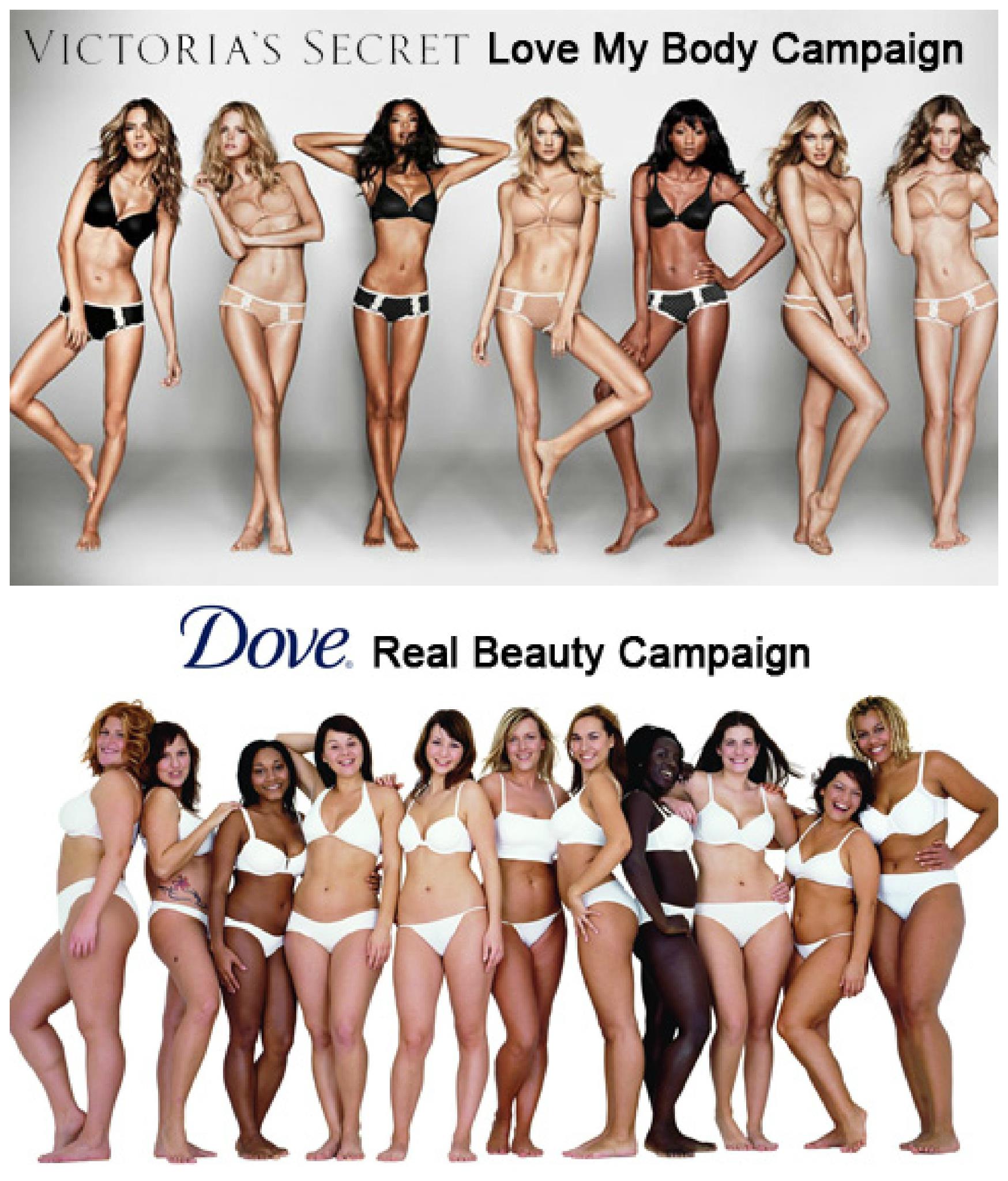
Since Dove came out with their "Real Beauty" campaign in 2004 I have had a problem with it. I've understood where the company is coming from and I have thought that they have done it wrong. I don't like that they, like all other modeling jobs, stick to a narrow body type. Where are the apple shapes? Wear are the extreme pear shapes? Where are the ruler shapes? What about the strawberries? Sure, that's the shape of a model, but they're beautiful, too.I didn't like that they were trying to fight the over-sexualizing of women by using women in underwear.  People give Victoria's Secret a hard time because their models are so sexualized. I saw only three differences between Victoria's Secret and Dove.
  1. Victoria's Secret sells bras, panties, lingerie, etc. Dove sells soap, deoderant, shampoos, etc.
  2. Victoria's Secret models are very skinny with large breasts and fairly young. Dove models are extra curvy hourglasses that are late-20s and older. And none of the Dove models look like they really tone much.
  3. Victoria's Secret models are wearing interesting bras and panties (lacy, piped, pushups, whatever you want). Dove models are wearing plain bras and panties.
Another thing that bothers me is their check-box pictures. I don't find this appropriate. Who said that freckles aren't beautiful? There are freckled models and actresses. Who said gray hair isn't beautiful? There are also older models and actresses that have gray hair. In fact, there are quite a few people who think grey hair is distinguished. I see no difference between men with grey hair and women with grey hair and I'm marrying a man that's going grey and I will never let him dye his hair. Why? Cause I think it's sexy. My mom also told him that, if he dies his hair, he can't marry me. So why can't women have grey hair and the beauty of it go unquestioned? And wrinkles! Everyone will get wrinkles at some point. But there's a difference between an older woman with wrinkles who has taken care of her skin and one who has not. Don't make excuses for people not taking care of themselves. It's lazy.

But the one that bothered me most was this one. Boy or babe? What the heck is that all about? Since when does having short hair make you a boy? And the girl doesn't even look boyish! She has a fairly feminine face! Perhaps it's just because my hair is always short that this one bothers me so much. It also makes it look like Dove was stretching since there's definitely models with short hair. Have they never watched America's Next Top Model? Someone always gets her head shaved. Short hair is beautiful and striking. It's for those of us that have a wild side but don't want it to be so in-your-face as it could be. We're bold and brave and aren't attached to our hair. We understand how freeing it is to get your hair off your neck! So are we boys or babes? Babes! There's never been a question! Even if a girl purposely wants to look like a boy, she's still a babe. You know why? Cause she's trying something different and being herself.

But what really got attention, I think, is their video, "Evolution." I get why it got so big, I really do, I just don't agree with it. The point of the campaign is to make us feel beautiful, right? So why would you point out that this one girl needs so much work done to get to billboard ready? How does that make her feel? Also, who doesn't look better after putting on makeup and doing her hair? If you don't look better, you're doing it wrong. Yes, there's photoshopping, but the whole beginning part is just rude. I get that it's supposed to point out that what we see in the media is not reality, but why do you have to start before hair and makeup? To prove your point? Well good for you. You've touched the souls of so many women, but you've made this model and probably many other models feel horrible, like they're only pretty if they have photoshop to touch them up, even if their hair and makeup is done and done well. Bravo.

But my opinion is changing about the campaign. Why? Cause I think they finally got it right with their new video, "Real Beauty Sketches." The video doesn't make a person feel ugly. It doesn't show us that "media" is horrible, even though it's media itself. Instead, the focus is on the body image of the women. It's pointing out that women see all their flaws. Do I think they picked the most drastic ones? Yes. Do I think that's ok? In this case, yes. It's like doing a study on body image. You're going to find people who have a good body image along with the people that have bad body image. They used the most extreme changes so that they could most effectively reach their target audience. Instead of making a group of people feel ugly, this one simply helps women feel more beautiful. Dove, give yourself a pat on the back. You've finally got it right. It may have taken nine years, but you did it.

Thursday, March 21, 2013

The Society you Created

I recently wrote a paper about how society has effected the ideal female figure from the 18th-20th centuries. It was quite fascinating to me how a small change in the way women acted made a big change in the way women were depicted. It got me thinking about why the ideal figure is what it is today. I've got a theory and I think it's pretty good so I'm going to share it with you! How fun.

Many people blame fashion and media industries for the way women are depicted. Technically, this is true because these are the only industries that regularly depict people, but the blame cannot all be on them. The fashion industry bases their ideal figure off of what sells and what society wants. I also have a theory about why society has created this image, at least in western societies that are predominately Caucasian.

Fashion

The fashion industry is not an all-powerful organization that decides what people want. It is a series of businesses that, through trial-and-error as well as observation of target audiences, has determined what will sell and how to sell it, just like any other business. So why does the shape of models sell?

The world today is very much about equality. No one should have to change for anyone else. There should be products available for all types of people. In fashion, that means there should be clothes for all body types.

This has produced today's ideal model. She is tall and skinny, with wider shoulders than hips, B to C cup breasts, and a narrow waist. How did this come about? It's because she is a woman of no extremes. Let's take other body types into account here.

Straight women (very small, if any, curves) often want to look like they have more curves. This is often done by cinching the waist. Outfits that have this feature make waists look smaller on most body types, so most body types will work for this group of people.

However, there are also women that are perfect hourglasses, going on extreme variations in their measurements. These women also tend to love making their waists look smaller, but they also want to play up their curves. Therefore, a woman with no curves would not be able to successfully sell clothes to the majority of these women. These women would buy clothes from any body type besides straight.

Then there are triangle or pear shaped women. These women have large hips and small torsos. They usually want to narrow their hips and play up their torsos. Straight women wouldn't work because of their flat chests, and hourglasses would have a hard time, too, because of their evenness. Triangle shapes won't look to hourglasses because they don't have compatible hips. What looks flattering on an hourglass will often emphasize hips on triangles.

And now we come to apples. Women who are apple shaped are the same shape as a model, but have a tummy. They tend to emphasize their legs and chest, and down play their stomachs. This means any outfit that emphasizes the waist or hips is out. That means any model that has big hips or no curves cannot successfully sell clothes to these women. These women will buy clothes from women emphasize long legs and small hips.

So we get strawberry shaped women. This is the shape of a model, as long as she is also tall. This is why she is the ideal body type for the fashion industry:
  1. She has a narrow waist which appeals to all body types except apple
  2. She does not have a flat chest, which appeals to all body types.
  3. She has narrow hips (but not as narrow as her waist), which appeals to all body types.
  4. She has long legs, which appeals to all body types, especially apple. 
  5. She has broad shoulders, which appeals to all body types, especially straight.
Now let's look at why the other body types are not the ideal shape in the fashion industry.

Straight
  1. She has no defined waist, which does not appeal to hourglass, strawberry, or pear.
  2. She has very little bust, if any, which does not appeal to hourglass, strawberry, pear, or apple.
Hourglass
  1. She has large hips, which does not appeal to pears or apples.
  2. She has curvy legs with larger thighs, which does not appeal to apples.
Pears
  1. She has a small bust, which does not appeal to straight, hourglass, strawberry, or apple.
  2. She has large hips, which does not appeal to apple.
  3. She has curvy legs with larger thighs, which does not appeal to apple.
Apples
  1. She does not have a defined waist, which does not appeal hourglass, strawberry, straight, or pear.
  2. She has small hips, which does not appeal to hourglass, straight, or strawberry.

It can now be reasonably deduced that tall strawberry shapes are the least extreme, and, therefore, most versatile body shape for the act of selling clothing.

Society

Now we must look at why this body type sells, in fashion and media. It can't all be about selling clothing. There has to be a reason for her to be so prominent in the media as well. There is. It can be found in the ideal women have created for themselves.

Female relationships with males

Women today want to be equal with men. We want to be able to do everything that men can do and get equal pay and credit for it. We want to go to the same schools, work the same jobs, and participate in the same activities. We want to be seen as equally smart, hard-working, and athletic. 

When it comes to body shapes, the only equality we seek that plays into it is athletic. Athletes are often seen as having larger torsos than lower body. Most female athletes follow this idea of athleticism. They are usually strawberry shaped. Many of them would be straight if they were not athletes, because their broad shoulders have come from developing their muscles. It is very rare for short, extremely curvy women to become great athletes. Why? Being a short, curvy woman myself, I think it's because of our legs and chests. Short legs have to be taught to move differently than long legs if you want the same results in sports, and the process takes longer. Then there's our chests. Good sports bras for women with large chests are hard to find and expensive. I have never owned one. Because I've never owned one, it often hurts for me to jump around and run. I cannot be the only one with this issue.

On top of that, women also want to be just as fit as men traditionally have been. There is an emphasis on health and fitness like there's never been before. In history, men have been the fit, healthy, muscular ones because they've been the ones out doing manual labor. Now there's more and more office workers for both men and women, so society has compensated with exercise programs. That's why thin is in. Thin is in because we are a society of health nuts, often going in to the unhealthy because of cutting out food groups, fad diets, normal dieting, excessive exercise, and a general desire to always loose weight. You hardly ever hear about people maintaining weight. If you just go off the media, people lose weight until they're sickly and then they have to gain weight. No one ever points out that a celebrity has maintained a weight.

Female relationships with females

The difference between women seeking equality today and women seeking equality in the past is that we also want to be seen as women. This doesn't mean we want to be seen as damsels in distress or what have you, it means we don't want to be "one of the guys." Women today want to go to the office and then go out into the world and find a man. What she wants the man for is up to her, but that's what we want to do. 

We aren't the burning bras women of the past. We like our bras, well, most of us do. We simply want to be seen as a woman who works. No also, no shock, just women on the same field as men, but still women. We've gone beyond the straight ideal body type. We don't want to look like men. We haven't gone back to the extremely fertile and feminine body type, either. We don't want to be pushed into the home, even those of us that want to be stay-at-home mothers. Women today want their choices lain before them. 

Because we want to be seen as women, the time old practice of comparing ourselves is at its best. I don't know why women do this more than men. I don't think it's because of the media. The media has simply given us more women to compare ourselves to. If you read books from history about women (how to be a lady type things), women have always compared themselves. They have never wanted to be wearing the same thing at a party. It's always been common for women to try and out-dress each other. There is no difference between them and us in this field.

So how do we change the attitude towards women's bodies that is so prevalent in our society? We have to change ourselves. I, personally, think this is a great time to be a woman. In fashion, you can find clothing for your body type in every season. If you don't like the ideal women of Caucasian society, you can switch to the ideal woman of Latin, Black, Asian, or Arab society. Or any other society you want. It's up to you! We're now in a time when women decide our ideals, not men. Yes, we're still affected by men, but they do not hold all or even most of the say in what we look like or do. We are. 

The key to not being depressed about not looking like a model is to stop trying to be one. Understand what the purpose of a model is. Understand her her job. These women, yes, are beautiful, but the model you see is trying to sell you something. Do you really want to go through life always selling something, never looking like a woman and always like an ad? Cause if you replicate how these women look in the pictures you see of them, that's what you're doing. So stop blaming fashion and the media for your poor body image and embrace the woman that you are. 

Thursday, February 7, 2013

Make-up: Culture and Reality


Throughout my life, I have heard many men (and some women) take a stand against make-up. Many of these stands have been directed at me, many of them have been directed at women in general. I have always hated this. Yes, hate is a strong word. It is appropriately used in this instance.

Why do I hate this so much? Because make-up is nothing to laugh at, that's why. True, there are plenty of women that have no idea how to properly use make-up. For most of these women, I would guess there was either no one there to teach them how to put on make-up, or they refused to listen and now they're suffering for it. However, when make-up is properly applied, it does wonders for a women, and not just for her features.

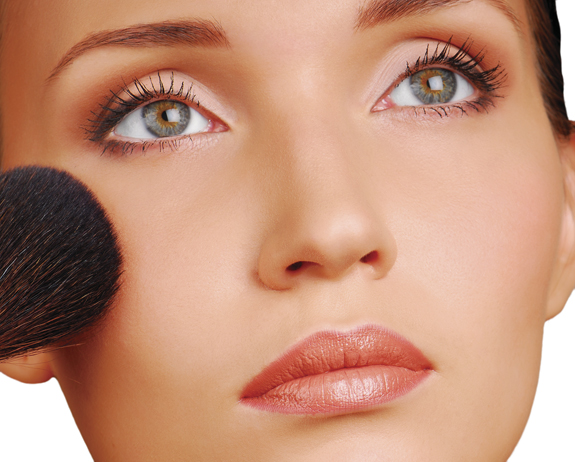
Properly applied make-up is not a fixing tool, but a balancing tool. Women wear make-up, not to "fix" their features, but to balance them out.

Foundation is used to balance skin tones. Women that rely on foundation often have splotchy skin or acne/acne scars. Foundation is used to balance out these colors and make the woman look healthier. Properly applied foundation cannot be seen. It is when too much or the wrong color or both is applied that foundation becomes an issue.

Mascara is used to widen eyes and lengthen eyelashes. Women that wear the proper amount of mascara often have short eyelashes, light eyelashes or blonde-tipped eyelashes (like me). Properly applied mascara is not chunky or thick. The mascara color flatters the eye color and doesn't drastically change the eyelashes. I use black mascara because my eyelashes go from very dark to very light. Wearing black mascara, for me, is just an extension of the dark part of my eyelashes. Women with light eyelashes should use browns. Mascara is incorrectly applied when the eyelashes are thick, chunky and look like a pencil can balance on them.

I could go through every type of make-up, but I won't. Every type of make-up is the same. Use the colors appropriate for the colors of your face and use them sparingly. Make-up choices should also be based on the formality of an event. (More make-up is acceptable at more formal events. I will probably get more into that in a different blog post.) It will make you look more confident and like you know what you're doing.

That's not even just an opinion. I read a wonderful article this morning that quotes a study performed at Harvard University that says the same thing. (The article talks about more than make-up. You should read it.)

In this study, people were shown pictures of women wearing no make-up, light make-up, and heavy make-up. The people responded with their first impressions of each woman. Women wearing light make-up looked more competent, trustworthy, and like-able than women with no make-up. Women wearing heavy make-up were still considered attractive, but they looked untrustworthy.

If this is true, then why do so many people have an issue with people wearing make-up? Well, I have a theory. I don't know why some women hate make-up. However, I think the make-up-hating men are victims of our culture.

Throughout history men and women have worn make-up. Especially when the world was run by nobles, the difference between male and female fashions, make-up included, were not that different. Starting in the mid- to late-eighteenth century, fashion for men became more "masculine." The middle-class started to rise at this time. Men went to work, women stayed home, and fashions started to emphasize these roles.

By the 19th century, an early business suit was the thing for men to wear. It was the uniform of a successful working man. As the working class became more important, make-up for men disappeared. Working men didn't have time for that nonsense. If a man wore make-up, he was soft, feminine, and not cut out for a world run by business.

So now make-up is just for women. With women and men filling the same roles in today's society, more men are starting to dislike make-up. Why? Because women can be successful in the work place and still wear make-up (therefore staying feminine). It's against the culture the developed world has been ingrained with for the past few centuries. These people against make-up say that it makes a woman look fake. I propose, however, that it is more a conflict of culture and reality than a perception of fakeness.

Tuesday, January 29, 2013

A Dating Guide From a Success Story

Successful dating is wonderfully fun.
There's been a focus on dating for the last few weeks in my circle of friends, especially those from church. I've decided to compile a list of dating guidelines based on my college dating experiences.

These guidelines have helped me over the last few years. The only times I have been wanting for dates is when men have thought that I was dating someone when I wasn't. When that happened, I was also letting some of these guidelines slide. And now I will never want for dates again because I am marrying my best friend and we have already decided to go on a date at least once a week.

  1. Meet the guys at least half way. It is not up to the men to initiate friendships, ask out, and follow up on dates. I'm aware that there are some women who will not ask men on dates out of principle. If you're like that, that's fine, but it doesn't take you off the hook. No one is going to ask you out if you don't at least let the guy know that you're interested in friendship, in the very least. If you go on a date and you have a great time, let him know you want a second date. If you're getting frustrated waiting for him to ask you out, ask him out. It's not that hard and you'll show that you're independent.
  2. Dress to impress. Seriously. If you're constantly hanging out with the guy you like in sweats, it's going to be harder for him to be attracted to you. Unless you're doing something active (hiking, frisbee, swimming, volleyball, etc.), or maybe you're having a late-night movie, look like you made an effort. Don't do your make up for the ladies, do it for the men. Wear flattering clothes. Don't dress like a skank unless you want to be treated like one, but do dress like you like yourself and your body. Dress like you find yourself attractive. If you think you're attractive, others will, too.
  3. Make your intentions clear. Sure, mystery can be intriguing and sexy, but so much mystery that the guy is confused is just going to lead no where. If you are really good friends, it's ok to tell him that you'd like to go on a date with him sometime. If you're too shy to do that, that's ok, too. As Ursualla told Ariel, "Don't forget the importance of body language."

    Body language is great. Show men you're interested by touching their arms, leaning on their shoulders, subtle things like that. Men aren't stupid. They may be oblivious at times, but they can read the signs, at least to some degree. My fiance was one of the most oblivious people I'd ever met, but he could at least tell that I wanted to spend more time with him.
  4. Make friends with men. When I first moved into my apartment complex, the first friends I made were men. I spent all my time hanging out with them. I'm very comfortable with that, since I have a hard time making friends with girls. I was interested in dating a couple of them, but I'm not their friend for that reason. I am their friend because I enjoy spending time with them. They are funny, smart, witty, and caring friends. The great thing about being friends that go one dates with all intentions out in the open is that I'm still friends with them, even though I'm no longer on the market.
There are my guidelines. They have served me well.

Monday, January 21, 2013

Fashion Week Spring RTW and Pre-Fall 2013

I've just got done looking at all the Spring RTW 2013 and Pre-Fall 2013 lines from my favorite designers. I know, I'm behind on this, but I've been busy getting engaged and stuff. I just want to say, I love where fashion is going. My favorite collection for Spring is by Marchesa. My favorite Pre-Fall collection is Chanel.

Marchesa's spring collection is pretty great. First off, they have beautiful tunics. I love tunics. They're super flattering and the length is just great. 

Georgina Chapman and Karen Craig are also very good with neutrals and colors. I loved that this collection went from neutrals to bright colors to deep, rich colors. The greatest thing about all these colors is that the pieces still look like they all belong in the same collection. With a lot of collections, using such a wide range of colors makes the pieces look disconnected and unprofessional as a whole collection. Not so with this collection!

Lastly, the draping is beautiful, as always. One thing that I have admired in many of Marchesa's collections is their master draping. What I love about this collection is the draping with different weights of fabric and the layering of drapes. 


The Chanel Pre-fall collection is by far my favorite collection this year. Why, do you ask? Because of the inspiration for it. It is very unique. The interesting thing about it is that I don't think I would wear any of the clothes in it. Besides the outerwear. There's some pretty great outerwear in the collection. 

I also love the collars. The cool thing about the collars is that they're collars that people would look at in history and go "no one would ever wear those again" but they're actually really cool. I could see people wearing most of these collars. 

Mostly, I love this collection because of the fine line between costume and fashion that it balances on. The inspiration for this line is clearly quite old. But it is surprisingly modern. Add a pair of heels and a nice, modern hair-do and you're good to go.